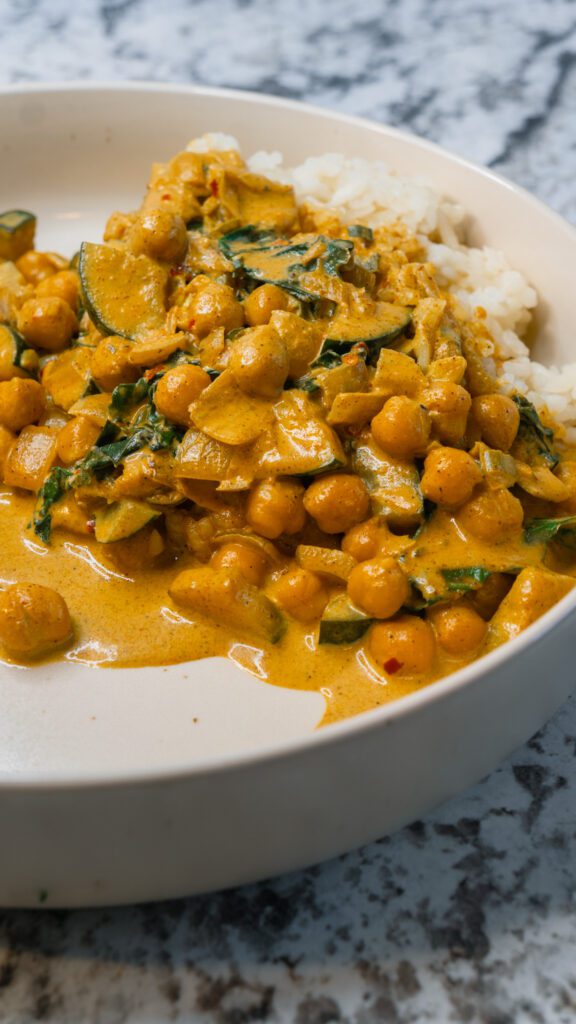
This vegan chickpea curry quickly became one of my favorite go-to meals during the two years I ate mostly plant-based. Although I’m not from India, I completely identify with the universal need to eat warm, comforting food—especially when it’s healthy. There’s something so cozy about a warm bowl of rice covered in a comforting sauce with an inviting array of spices and delicious coconut milk. It’s nourishing, filling, and still feels indulgent without being heavy.
Where Does Curry Originate From?
The word “curry” might seem simple, but it has a rich and fascinating history. It originally comes from the Tamil word kari, meaning sauce or spiced dish. In South India, curry often features creamy coconut-based sauces with fresh curry leaves, tamarind, and vibrant spices. In North India, curries are usually tomato- or yogurt-based, with warming spices like cumin, coriander, and garam masala creating depth and richness.
As people traveled and traded, curry spread far beyond the Indian subcontinent. In Jamaica and other parts of the Caribbean, curry was brought over by Indian indentured laborers in the 19th century. There, it evolved with local ingredients like Scotch bonnet peppers, allspice, and tropical vegetables, creating a bold and bright version of the dish.
Across the world, curry has been adapted in countless ways—from Japanese curry to Thai coconut curries—and each culture puts its own stamp on the dish. This global journey is part of what makes curry so special: it’s a warm, comforting meal that has traveled across continents, yet always feels like home no matter where you enjoy it.
Curries From Around the World
Laos: Curries are often lighter, flavored with fresh herbs, galangal, lemongrass, and sometimes coconut milk, creating a fragrant, delicate sauce.
South India: Coconut milk-based, uses curry leaves, tamarind, and vibrant spices.
North India: Tomato- or yogurt-based, warming spices like cumin, coriander, and garam masala.
Maldives: Coconut-rich curries with fish or vegetables, infused with local spices and aromatics.
South Africa: Indian-influenced curries often featuring beans, lentils, or meat, with a hearty, rich sauce.
Jamaica/Caribbean: Spicy, aromatic, often includes Scotch bonnet peppers and tropical vegetables.
Thailand: Creamy coconut milk-based curries with bold herbs and lime flavors.
Japan: Mild, slightly sweet curry often served over rice with vegetables or meat.
Vegan Chickpea Curry Ingredients
I like to gather all my ingredients on my countertop before I start cooking. It makes it easier to get into a rhythm, and my flow won’t be interrupted. For this easy vegan chickpea curry, I love seeing the chickpeas, zucchini, spices, and coconut milk all together—it gets me excited to start cooking. Each ingredient has a purpose, from the sweet onions and aromatic garlic to the warming curry powder and creamy coconut milk. Having everything prepped and ready makes following this vegan chickpea curry coconut milk recipe simple, even on a busy weeknight. Now, let’s go over what you’ll need for the best vegan chickpea curry!
1 white onion, diced – White onion is mild and slightly sweet. Softens beautifully when sautéed, creating a rich base.
2 tablespoons neutral oil – Canola, grapeseed, or sunflower. Handles heat well and doesn’t compete with spices.
3 tablespoons minced garlic cloves – Adds warmth and depth. Fresh garlic blooms in the oil for a fragrant base.
1 tablespoon grated ginger or ginger paste – Adds brightness and subtle zing. Balances coconut milk and chickpeas.
1 tablespoon curry powder – Provides warmth, complexity, and signature curry flavor. Essential for this recipe.
1 teaspoon garam masala – Adds sweet, aromatic notes and finishes the curry with cozy layered flavor.
½ teaspoon turmeric powder – Earthy undertone and golden color. Offers natural anti-inflammatory benefits.
½ cup crushed tomatoes – Adds acidity and body. Balances coconut milk and creates a smooth sauce.
14 oz full-fat coconut milk (or non-dairy milk or heavy cream) – Makes the curry creamy and silky. Heavy cream works if avoiding coconut.
½ cup vegetable broth – Provides liquid for simmering. Helps chickpeas and zucchini absorb spices.
2 15-oz cans chickpeas, drained – Protein-packed and hearty. Soaks up flavors and adds texture.
1 zucchini, diced into triangles – Softens into the sauce, adds subtle sweetness. Triangular cuts hold shape.
1–2 handfuls fresh kale – Added last to stay bright. Slight bitterness balances coconut milk. Spinach works too.
1 teaspoon kosher salt (or to taste) – Rounds out flavors and lets spices shine. Taste as you go.
How to Make Vegan Chickpea Curry
Heat 2 tablespoons of neutral oil in a large skillet over medium heat. Add the diced white onion and cook until soft and translucent, about 5–7 minutes. Why it matters: Sautéing slowly draws out the onion’s natural sweetness, forming the flavorful base of your easy vegan chickpea curry.
Stir in the minced garlic and grated ginger. Cook for 1–2 minutes, until fragrant. Pro tip: Fresh garlic and ginger release essential oils when gently heated. Be careful not to burn them.
Sprinkle in 1 tablespoon curry powder, 1 teaspoon garam masala, and ½ teaspoon turmeric. Stir constantly for 30–60 seconds. Why it matters: Toasting spices wakes them up, releasing essential oils and boosting flavor.
Pour in ½ cup crushed tomatoes and ½ cup vegetable broth, stirring to combine. Let simmer gently for 3–4 minutes. Tip: Simmering allows flavors to meld and balances the acidity of the tomatoes with coconut milk.
Stir in 2 cans of drained chickpeas and 1 diced zucchini. Simmer for 8–10 minutes, until zucchini is tender but not mushy. Why it matters: Chickpeas absorb the sauce while zucchini softens, adding sweet texture.
Pour in 14 oz full-fat coconut milk (or heavy cream). Stir gently and bring to a low simmer. Add 1–2 handfuls of fresh kale and cook 2–3 minutes. Tip: Adding greens last preserves color, texture, and nutrients.
Add 1 teaspoon salt (or to taste) and stir well. Taste and adjust seasoning as needed. Pro tip: Proper seasoning elevates flavors, and a squeeze of lemon brightens the curry.
Serve over rice or your favorite grain. Pair with naan, roti, or a simple salad for a complete meal. Why it matters: Serving immediately keeps the sauce creamy and the vegetables fresh.
Substitutions & Variations
Protein variations – Add tofu or tempeh along with chickpeas for extra protein and texture.
Chickpea curry without coconut milk – Swap the coconut milk for heavy cream or another non-dairy milk like oat or almond milk. The curry stays creamy and rich.
Chickpea and spinach curry – Replace kale with fresh spinach added at the end of cooking. Spinach wilts quickly, giving the curry a softer texture and vibrant color.
Add sweet potatoes, cauliflower, or bell peppers – Stir in extra vegetables while simmering to make the curry heartier and more filling.
Boost flavor with Thai curry paste – Add a spoonful of red or yellow Thai curry paste for extra depth and subtle heat.
FAQs
Can I make this curry without coconut milk? Yes! Swap coconut milk for heavy cream or another non-dairy milk. You’ll still have a creamy, flavorful chickpea curry without coconut milk.
Can I freeze this vegan chickpea curry? Absolutely. Store in an airtight container for up to 3 months. Reheat gently on the stovetop or in the microwave.
What can I serve with this curry? Serve over rice, quinoa, or your favorite grain. Naan, roti, or a simple salad also pair beautifully.
Can I add other vegetables or proteins? Yes! Sweet potatoes, cauliflower, bell peppers, tofu, or tempeh all make delicious additions. This works well for a chickpea and spinach curry version, too.
How can I make it spicier? Add a spoonful of red or yellow Thai curry paste, or a pinch of cayenne. Taste as you go to control heat.
This easy vegan chickpea curry is creamy, comforting, and packed with flavor. Tender chickpeas, zucchini, and warming spices come together in a rich coconut milk sauce. Perfect for weeknight dinners or meal prep, this vegan chickpea curry coconut milk recipe is simple, nourishing, and cozy.
Ingredients
1 white onion, diced
2 tablespoons neutral oil
3 tablespoons minced garlic cloves
1 tablespoon grated ginger or ginger paste
1 tablespoon curry powder
1 teaspoon garam masala
1/2 teaspoon turmeric powder
1/2 cup crushed tomatoes
14 oz full-fat coconut milk (or non-dairy milk or heavy cream)


 Get Recipe Ingredients